-
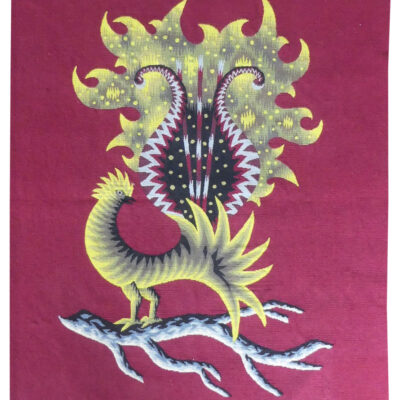
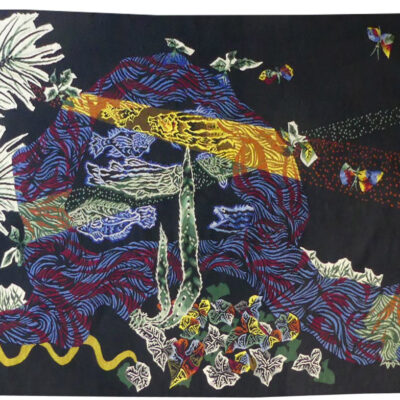
Lurçat's body of work is immense, but it is his role in the revival of the art of tapestry that has ensured his place in history. He began working with canvas in 1917, then collaborated with Marie Cuttoli in the 1920s and 1930s. His first collaboration with Les Gobelins dates back to 1937, when he discovered the Apocalypse tapestry in Angers, which inspired him to devote himself entirely to tapestry. He first tackled the technical issues with François Tabard, then, when he moved to Aubusson during the war, he defined his own system: large stitches, counted tones, numbered cartoons. A huge production then began (more than 1,000 cartoons), amplified by his desire to involve his painter friends, the creation of the A.P.C.T. (Association des Peintres-Cartonniers de Tapisserie) and his collaboration with the La Demeure gallery and Denise Majorel, then by his role as a tireless promoter of the medium throughout the world. His woven work bears witness to a specifically decorative art of imagery, in a highly personal, cosmogonic symbolic iconography (sun, planets, zodiac, four elements, etc.), stylized plants, animals (goats, roosters, butterflies, chimeras, etc.), stand out against a background without perspective (deliberately distanced from painting) and, in his most ambitious cartoons, are intended to share a vision that is both poetic (he sometimes embellishes these tapestries with quotations) and philosophical (the major themes were addressed as early as the war: freedom, resistance, fraternity, truth, etc.) and whose culmination was to be the "Chant du Monde" (Jean Lurçat Museum, former Saint-Jean Hospital, Angers), which was unfinished at the time of his death. To his traditional scattered motifs (stars, fish, butterflies, etc.), Lurçat added two intersecting rays of light (hence the title) that alter the colors along their path: there could be no better way to show that the sun can be a danger to tapestry (another cartoon, "Coup de soleil" (formerly in our possession) illustrates the theme even more explicitly). Bibliography: Tapisseries de Jean Lurçat 1939-1957, Pierre Vorms Editeur, 1957 Exhibition catalog: Lurçat, 10 ans après, Musée d'Art moderne de la ville de Paris, 1976 Cat. Expo. Les domaines de Jean Lurçat, Angers, Musée Jean Lurçat et de la tapisserie contemporaine, 1986 Colloque Jean Lurçat et la renaissance de la tapisserie à Aubusson, Aubusson, Musée départemental de la Tapisserie, 1992 Exhibition catalog. Dialogues avec Lurçat, Museums of Lower Normandy, 1992 Exhibition catalog. Jean Lurçat, Donation Simone Lurçat, Academy of Fine Arts, 2004 Gérard Denizeau, Jean Lurçat, Liénart, 2013 Exhibition catalog: Jean Lurçat, Meister der französischen Moderne, Halle, Kunsthalle, 2016 Exhibition catalog: Jean Lurçat au seul bruit du soleil, Paris, Galerie des Gobelins, 2016Aubusson tapestry woven by the Goubely-Gatien workshop. With its ribbon signed by the artist. Circa 1955.
-
The voice of the reliquary
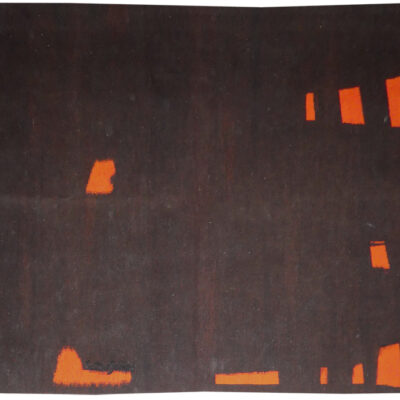
A student of Wogensky at the Ecole Nationale Supérieure des Arts Appliqués, Sautour-Gaillard saw his first woven cardboard created in 1971 by the Legoueix workshop (a collaboration that continued thereafter), He then went on to produce a number of monumental projects, the most spectacular of which was "Pour un certain idéal" (For a Certain Ideal), a series of 17 tapestries on the theme of the Olympic Games (now housed in the Olympic Museum in Lausanne). Initially close to lyrical abstraction, in the 1990s the artist created cartoons based on assemblages of decorative motifs, textures, and figures, apparently superimposed and unified in the weaving. "La voix du reliquaire" (The Voice of the Reliquary) shows how close the artist was in his early days to the lyrical abstraction of artists such as Soulages and Schneider. Transposed into wool, we find the effects of gestures and even drips characteristic of the artists of the "lyrical flight" movement, in an extremely limited color palette. Bibliography: D. Cavelier, Jean-René Sautour-Gaillard, la déchirure, Lelivredart, 2013, reproduced on p.163Aubusson tapestry woven by the Legoueix workshop. Ribbon signed by the artist, no. 1/3. 1975. -
Equinox
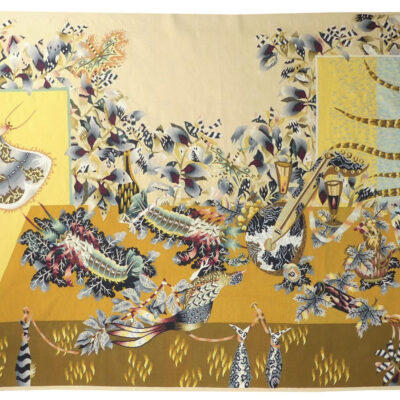
Lurçat's body of work is immense, but it is his role in the revival of the art of tapestry that has ensured his place in history. He began working with canvas in 1917, then collaborated with Marie Cuttoli in the 1920s and 1930s. His first collaboration with Les Gobelins dates back to 1937, when he discovered the Apocalypse tapestry in Angers, which inspired him to devote himself entirely to tapestry. He first tackled technical issues with François Tabard, then, when he moved to Aubusson during the war, he defined his own system: large stitches, measured tones, numbered cartoons. A huge production then began (more than 1,000 cartoons), amplified by his desire to involve his painter friends, the creation of the A.P.C.T. (Association des Peintres-Cartonniers de Tapisserie) and his collaboration with the La Demeure gallery and Denise Majorel, then by his role as a tireless promoter of the medium throughout the world. His woven work bears witness to a specifically decorative art of imagery, in a highly personal, cosmogonic symbolic iconography (sun, planets, zodiac, four elements, etc.), stylized plants, animals (goats, roosters, butterflies, chimeras, etc.), stand out against a background without perspective (deliberately distanced from painting), and intended, in his most ambitious cartoons, to share a vision that is both poetic (he sometimes embellishes these tapestries with quotations) and philosophical (the major themes were addressed from the war onwards: freedom, resistance, fraternity, truth, etc.) and which culminated in the "Chant du Monde" (Jean Lurçat Museum, former Saint-Jean Hospital, Angers), unfinished at the time of his death. In a sober and nuanced harmony of colors, the theme of the laid table takes on a new resonance, as if crushed by the equinox sun, which takes precedence over the usual still lifes of game, lobsters, and mandolins. Bibliography: Tapisseries de Jean Lurçat 1939-1957, Pierre Vorms Editeur, 1957 Cat. Expo. Lurçat, 10 ans après, Musée d'Art moderne de la ville de Paris, 1976 Cat. Expo. Les domaines de Jean Lurçat, Angers, Musée Jean Lurçat et de la tapisserie contemporaine, 1986 Colloque Jean Lurçat et la renaissance de la tapisserie à Aubusson, Aubusson, Musée départemental de la Tapisserie, 1992 Exhibition catalog. Dialogues avec Lurçat, Museums of Lower Normandy, 1992 Exhibition catalog. Jean Lurçat, Donation Simone Lurçat, Academy of Fine Arts, 2004 Gérard Denizeau, Jean Lurçat, Liénart, 2013 Exhibition catalog: Jean Lurçat, Meister der französischen Moderne, Halle, Kunsthalle, 2016 Exhibition catalog: Jean Lurçat au seul bruit du soleil, Paris, Galerie des Gobelins, 2016Aubusson tapestry woven by the Tabard workshop. With its ribbon. Circa 1945. -
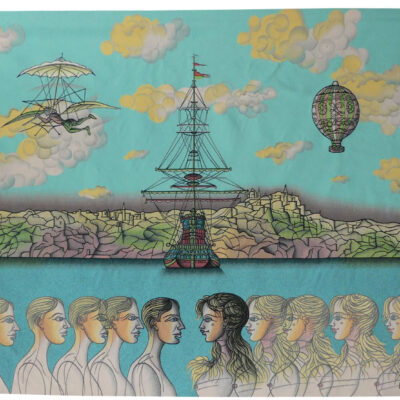
Travel, the 3rd millennium
Although he first made his name as a painter of large-scale decorations (particularly for the stage), Carzou's forays into tapestry are relatively rare. This cartoon displays the artist's characteristic style, with intertwining lines illustrating dreamlike subjects: the theme is taken from Carzou's (only) cartoon woven by the Manufactures Nationales, "L'invitation au voyage" (Invitation to Travel). At the dawn of the 3rde At the turn of the millennium (and a few months before his death), the artist, a regular critic of modern society, had a unique vision of future travel, focused on ballooning and sailing.Aubusson tapestry woven in Jacques Fadat's workshop. Certificate signed by the artist, no. 1/1. 2000. -
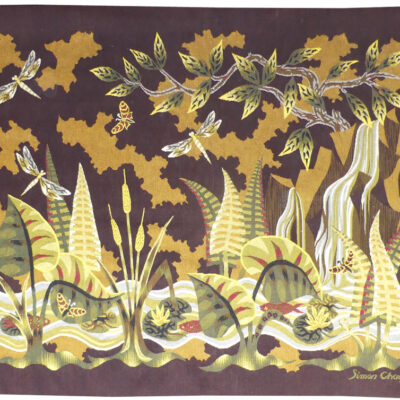
Clear source
In 1953, Jean Picart le Doux offered Chaye the opportunity to become his assistant and encouraged him to create tapestry cartoons. Chaye went on to produce numerous bucolic cartoons, as well as scenes from Normandy (Mont Saint Michel, Honfleur, regattas, etc.), where he was born. This is a classic cartoon in the naturalist vein of the artist, who specialized in enclosures, hedges, and other riverbanks, animated with animals. Bibliography: Simon Chaye tapisseries contemporaines, Editions Librairie des musées, 2014, ill. p.41Aubusson tapestry woven in the Bonjour workshop. With its ribbon signed by the artist, no. 3/4. Circa 1960. -
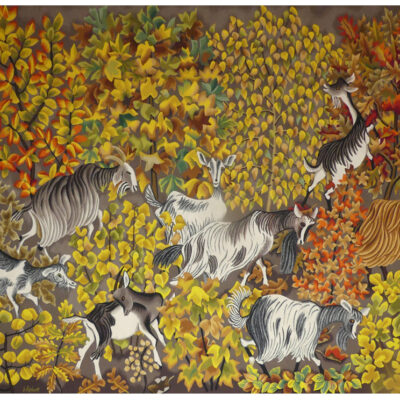
Honeysuckle
Aubusson tapestry woven in the Goubely workshop. With its bolduc signed by the artist, no. 1. 1973. Benedictine monk and illuminator, Dom Robert met Jean Lurçat in 1941 at En Calcat Abbey: without ever stopping drawing (his watercolors, taken from life, would serve as a formal repertoire for his tapestries), his work as a cartoonist (he was a member of the A.P.C.T. from its inception) took on considerable scope (around a hundred cartoons, numbered), and enjoyed unwavering success. His style is easily recognizable: a rejection of perspective, subjects inspired by nature (a paradisiacal nature) where flora and fauna are treated in a pictorial manner, joyfully intermingling in a profusion of exuberance, and where the influence of medieval mille-fleurs tapestries can be detected. Poetic and colorful, Dom Robert's cartoons embody the spiritual asceticism of their author. Inaugurated in spring 2015, the Dom Robert Museum is located in Sorèze, in the Tarn region, within the former Abbey School. Goats and leaves in all their variety, rather than "Chèvrefeuilles" (goat's beard), as Dom Robert never hesitated to use puns (see "Plein champ" (Open Field)). The goat motif appears in this last cartoon, from 1970. Here, on a scale unique to this theme, the goats are depicted in an autumnal landscape, a reminder of "Autumn," which concluded his series on the Seasons in 1943. A similar tapestry is kept at the Cité Internationale de la Tapisserie in Aubusson. Bibliography: Cat. Expo. Dom Robert, tapisseries récentes, galerie la Demeure, 1974, ill. p. 15, design, p. 23 Collective, Dom Robert, Tapisseries, Editions Julliard, 1980, ill. p.70-71, detail on cover, design p.85 Collective, Dom Robert, Tapisseries, Editions Siloë-Sodec, 1990, ill. p.62-67 Exhibition catalog. Dom Robert, œuvre tissé, Angers, Musée Jean Lurçat et de la tapisserie contemporaine, 1990 Exhibition catalog. Hommage à Dom Robert, Musée départemental de la tapisserie, Aubusson, 1998 Collective, la clef des champs, Dom Robert, Editions Privat, 2003, ill. p.124 Collective, Les saisons de Dom Robert, Tapisseries, Editions Hazan, 2014, ill. p.164-167 B. Ythier, Guide du visiteur, Cité Internationale de la tapisserie d’Aubusson, ill. p.65 R. Guinot, special edition La Montagne, une Cité pour la tapisserie d’Aubusson, 2018, ill. p.82 Collective, La tapisserie française, Editions du Patrimoine, 2017, ill. 312-313 -
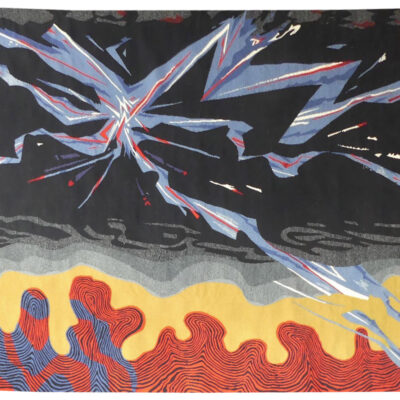
Electricity
Lurçat approached Saint-Saëns, initially a fresco painter, in 1940. And during the war, Saint-Saëns produced his first allegorical masterpieces, tapestries depicting indignation, combat, and resistance: "Les Vierges folles" (The Mad Virgins) and "Thésée et le Minotaure" (Theseus and the Minotaur). At the end of the war, he naturally joined Lurçat, whose convictions he shared (on numbered cartoons and limited tones, on the specific style required for tapestry, etc.) within the A.P.C.T. (Association des Peintres-cartonniers de Tapisserie). His universe, in which the human figure, stretched and elongated, occupies a considerable place (compared in particular to the place it occupies in the work of his colleagues Lurçat and Picart le Doux), revolves around traditional themes: women, the Commedia dell'arte, Greek myths, etc., sublimated by the brilliance of the colors and the simplification of the layout. He then evolved in the 1960s towards more lyrical, almost abstract cartoons, dominated by cosmic elements and forces. "L'éclair" [another name for our cartoon]... reflects Saint-Saëns' new direction, which became apparent in the 1960s; it evokes cosmic forces [or, with our title, physical phenomena] less through the precision of the drawing than through the power, even the stridency, of the color....This tapestry adorned the Aerospatiale poster for the inauguration of its Cultural Center in Toulouse in 1971," Michèle Heng tells us in the Aubusson exhibition catalog. Saint-Saëns, woven works, Aubusson, Musée départemental de la Tapisserie, 1987, reproduced on p.47. Exhibition catalog. Marc Saint-Saëns, tapestries, 1935-1979, Angers, Musée Jean Lurçat et de la Tapisserie Contemporaine, 1997-1998.Aubusson tapestry woven by the Legoueix workshop. With its ribbon signed by the artist. 1970. -
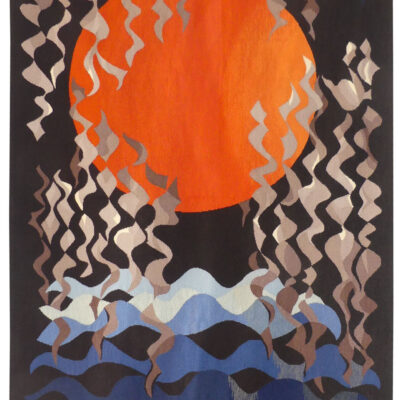
Nachtsonne (Night Sun)
Tapestry woven by Münchener Gobelin Manufaktur. With ribbon signed by the artist. Circa 1970.Holger studied at the National School of Decorative Arts in Aubusson and worked with Lurçat before the latter's death in 1966. He produced numerous dreamlike cartoons woven in Aubusson. Now based in the United States, he remains a tireless advocate and witness of modern tapestry, organizing exhibitions and conferences on the subject. Some of his cartoons have been woven in the two active factories in Germany, in Nuremberg and Munich, using the Aubusson technique.